Risk Management in Complex Systems: Application of the MIL‑STD‑882D Standard
Abstract
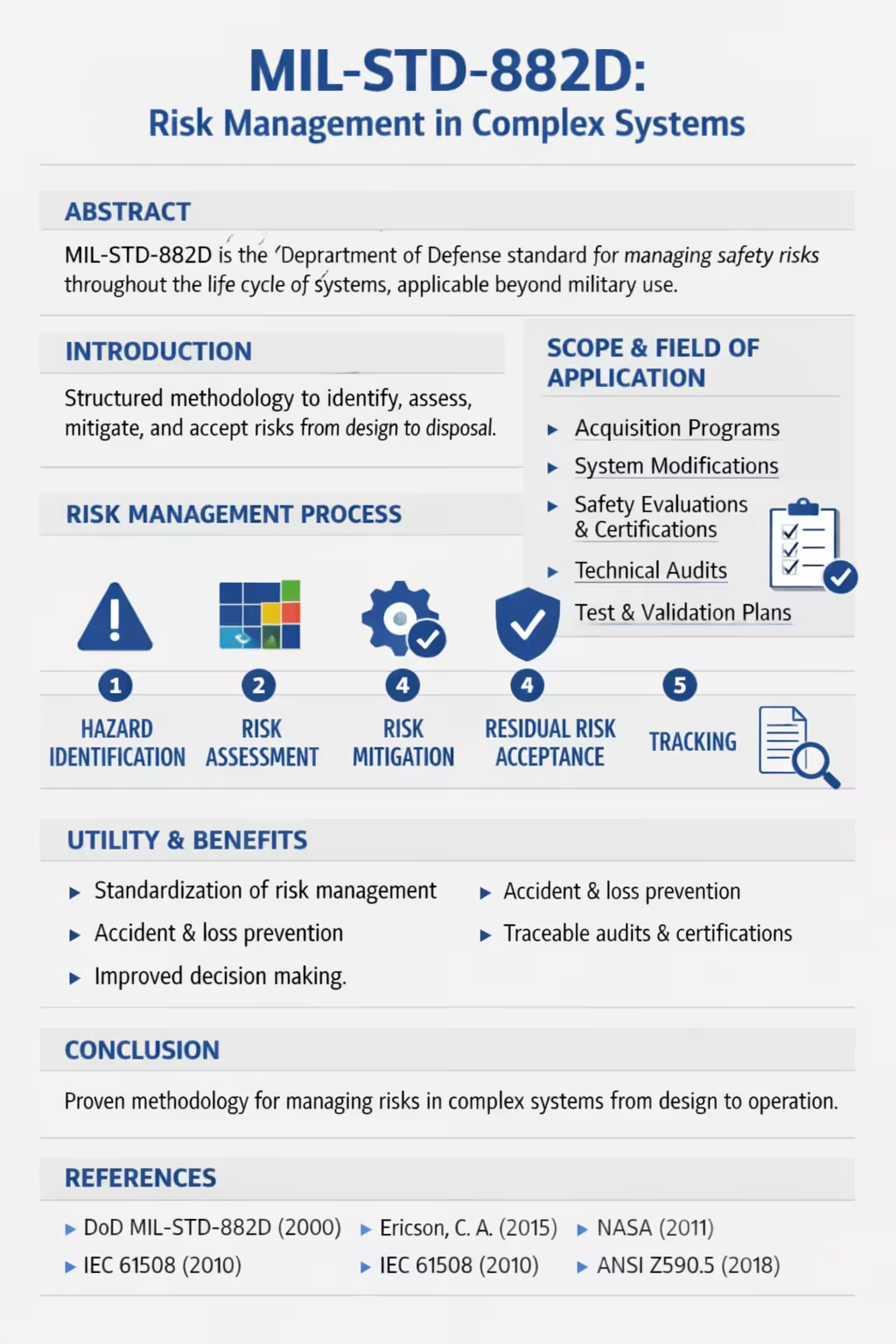
The MIL‑STD‑882D standard, issued by the United States Department of Defense (DoD), establishes the technical and methodological framework for managing safety risks in systems throughout their entire life cycle. Its application transcends the military domain, becoming a reference for industries seeking to integrate safety as an essential component of system design and operation.
1. Introduction
Operational safety and risk management are fundamental pillars in the development of critical systems. In this context, MIL‑STD‑882D provides a structured methodology to identify, assess, mitigate, and formally accept risks in a traceable manner. Its approach is based on integrating safety within the engineering process, ensuring that risks are managed from system conception to final disposal.
2. Scope and Field of Application
The standard applies to systems, subsystems, equipment, and facilities under development, modification, or use by the DoD. It covers all life cycle phases: design, development, testing, production, operation, maintenance, and disposal.
Its field of application includes:
- Acquisition and technology development programs
- System modification and upgrade contracts
- Operational safety evaluations and certifications
- Technical audits and design reviews
- Test and validation plans
This comprehensive approach ensures risk traceability and guarantees that technical decisions consider safety as a critical variable.
3. Risk Management Process
The standard defines a systematic process consisting of five main stages:
- Hazard Identification: Analysis of hardware, software, environment, and intended use.
- Risk Assessment: Classification based on severity and probability.
- Risk Mitigation: Application of the precedence sequence (elimination, safety devices, warnings, procedures).
- Residual Risk Acceptance: Formal review and approval by the competent authority.
- Tracking: Continuous documentation and control throughout the system life cycle.
This process ensures that risks are managed coherently and verifiably, aligning safety with operational and design objectives.
4. Utility and Benefits
Applying MIL‑STD‑882D provides tangible benefits:
- Standardization: Establishes a common language for risk management.
- Prevention: Reduces accidents, losses, and environmental damage.
- Traceability: Enables audits and certifications with solid documentation.
- Optimization: Improves technical and strategic decision-making.
Its adoption in civilian sectors—such as energy, transportation, and manufacturing—demonstrates its versatility and value as a safety engineering tool.
5. Conclusion
MIL‑STD‑882D represents a mature and proven methodology for risk management in complex systems. Its structured, engineering-based approach integrates safety as an essential part of design and operation. In environments where reliability and safety are decisive factors, this standard stands as an indispensable reference for organizations pursuing technical and operational excellence.
References (APA)
- Department of Defense. (2000). MIL‑STD‑882D: Standard Practice for System Safety. Washington, D.C.: U.S. Department of Defense.
- Ericson, C. A. (2015). System Safety and Risk Management: A Practical Approach. CRC Press.
- NASA. (2011). System Safety Handbook. NASA Safety Center.
- IEC. (2010). IEC 61508: Functional Safety of Electrical/Electronic/Programmable Electronic Safety-related Systems. International Electrotechnical Commission.
- ANSI/ASSE. (2018). Z590.3: Prevention through Design Guidelines for Addressing Occupational Hazards and Risks in Design and Redesign Processes. American Society of Safety Engineers.
Comments