THE ART OF REINVENTION: LIFE LESSONS ONLY IMMIGRANTS TRULY UNDERSTAND
Introduction
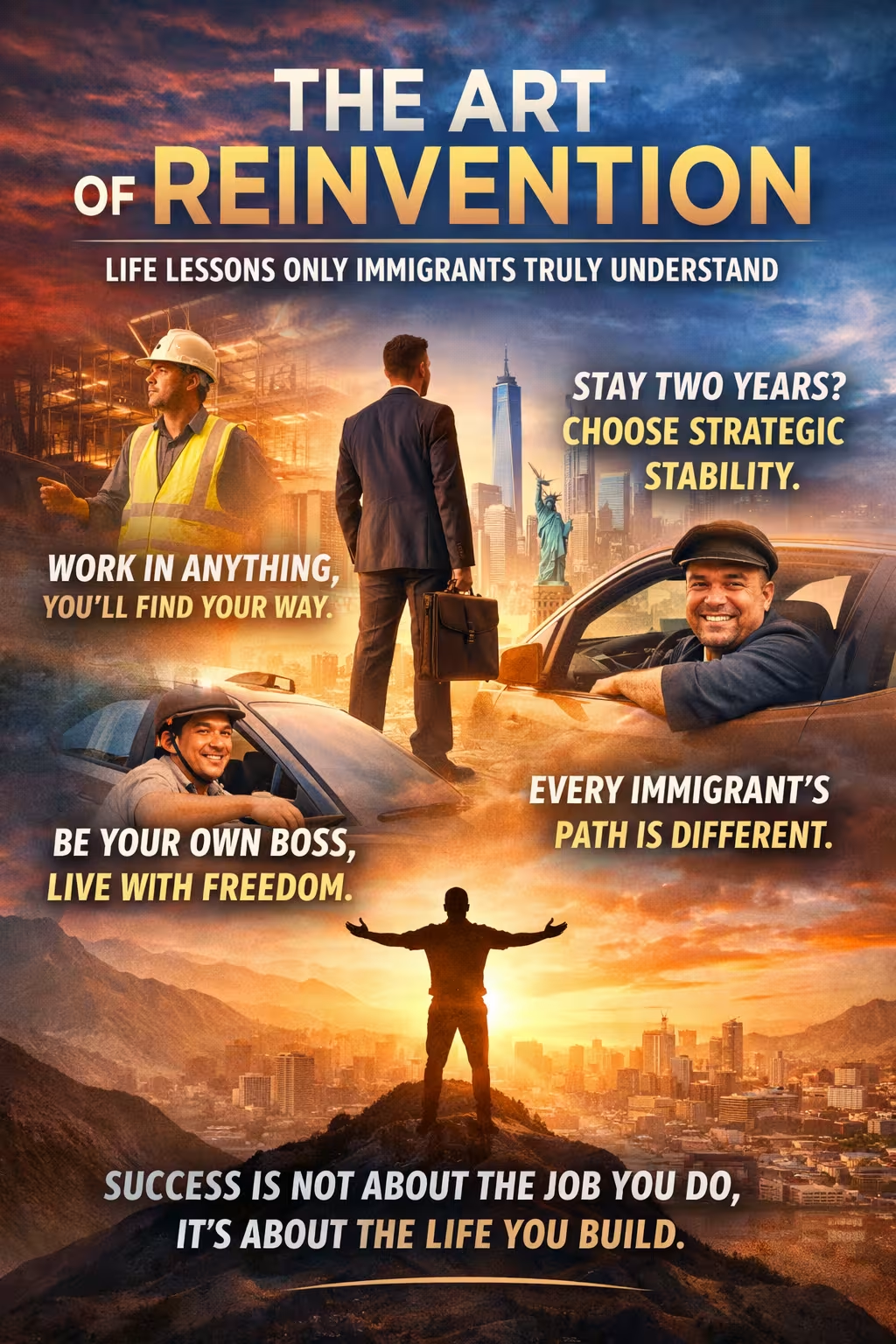
Migrating is not just changing countries; it is changing identities. It is rebuilding your professional, emotional, and cultural self while learning to survive, advance, and eventually thrive. Every immigrant arrives carrying a backpack full of advice, warnings, and opinions: “Work in anything, you’ll eventually find what you like”, “Stay at least two years in the same job so banks see you as stable”, “Become independent—drive a taxi, be your own boss.”
And in the middle of all those voices, one must learn to listen to the most important one: your own.
This article gathers those experiences, contrasts them, and transforms them into an inspiring reflection on what it truly means to build a life from scratch.
1. The Universal Advice: “Work in Anything”
Many immigrants begin by accepting any job available. Not out of lack of ambition, but out of strategy.
That first job —or second, or fifth— does not define anyone. It is simply a temporary platform to stabilize, learn the language, understand the work culture, and buy time to plan the next step.
An employer once told me:
“It doesn’t matter what you’ve done before. This is America. Here you can work in whatever you want.”
And he was right. Labor mobility is real. Reinvention is possible. The past does not limit the future.
2. Stability as a Requirement: “Stay Two Years So Banks See You as Reliable”
This advice reflects a practical truth: the financial system values permanence.
But it also hides a risk: confusing stability with stagnation.
Stability is useful when it serves a purpose:
- building credit
- qualifying for a mortgage
- demonstrating consistent income
- opening doors to better opportunities
But staying in a job that does not help you grow—just to complete a number of months—can become a silent prison.
The key is simple: strategic stability, not stability driven by fear.
3. The Independent Route: “I Prefer Being a Taxi Driver—I’m My Own Boss”
Independence is a powerful temptation.
For many immigrants, driving a taxi, working with Uber, or starting a small business represents immediate freedom:
- control of their schedule
- direct, flexible income
- a sense of autonomy
- no bosses
But it also comes with risks:
- lack of benefits
- unstable earnings
- physical exhaustion
- limited structured growth
Being independent is valid, admirable, and necessary for many. But it is not the only path.
True freedom is not “having no boss,” but having options.
4. The Unspoken Truth: Every Immigrant Lives a Different Career
There is no universal formula.
What works for one person may be a disaster for another.
What feels like stability to some feels like resignation to others.
What feels like independence to some feels like exhaustion to others.
The immigrant’s career is not linear. It is a map full of detours, lessons, and reinventions.
And that is not a weakness. It is a competitive advantage.
5. The Final Lesson: Immigrant Success Is Not Measured by the Job You Do, but by the Life You Build
A successful immigrant is not the one who earns the most money.
It is the one who manages to:
- recover their dignity
- rebuild their identity
- create opportunities for their family
- feel proud of their journey
Immigrant success is deeply human.
It is the sum of invisible sacrifices, difficult decisions, and dreams that refuse to die.
Conclusion
To migrate is an act of courage.
To reinvent yourself is an act of intelligence.
To persist is an act of faith.
Among all the advice we hear —work in anything, stay two years, be your own boss— there is one that should rise above the rest:
Build the life that brings you peace with yourself.
Because in the end, countries change, jobs change, opportunities change…
But your story, the one you are writing every day, is yours alone. And it deserves to be great.
References (APA Format)
- Berry, J. W. (2017). Immigration, acculturation, and adaptation. Applied Psychology, 46(1), 5–34.
- Portes, A., & Rumbaut, R. G. (2014). Immigrant America: A portrait. University of California Press.
- OECD. (2023). International Migration Outlook. Organisation for Economic Co‑operation and Development.
- Suárez-Orozco, C. (2020). Humanitarianism and mass migration: Confronting the world crisis. University of California Press.
- World Bank. (2023). Migration and Development Brief. World Bank Group.
Comments